
As Senior Director of Finance for a major insurance company, my executive coaching client, Marilyn, knew more about rules and regulations than most of the people in her company. And she stuck to them—down to the tiniest detail. She acknowledged that she might be a bit rigid, but being flexible in her industry brought risks she just wasn’t willing to take.
You see, over several years of working in such a highly regulated industry, Marilyn had learned the “right way” to do things, and once learned, she felt strongly that the company should stick to those “right ways.” Given that she was also responsible for leading others, Marilyn was afraid to set a precedent by questioning a proven procedure or by doing anything substantially different from the past. She feared that her employees would get out of control and start bending the rules. “Color inside the lines,” she told them. “That’s how you avoid problems in this function and in this industry.”
The higher Marilyn reached in the organization, however, the more this “black-and-white thinking” approach brought unexpected consequences. By the time I got involved with her as an executive coach, it had reached a point where Marilyn’s colleagues wouldn’t even approach her for opinions because she seemed unable or unwilling to offer useful, creative solutions. My verbal interviews with stakeholders revealed that, because of her rigidity around rules, she came across as cold and incapable of being collaborative.
As a result, Marilyn’s colleagues were holding separate sidebar conversations. And, one by one, she watched other functional peers get promoted while she stayed at the same level.
Don’t get me wrong—Marilyn was very good at what she did. She was reliable, incredibly knowledgeable, and she and her team produced good quality work. But based on my key stakeholder interviews, it was obvious to me that her attachment to black-and-white thinking was holding her back from moving forward in the organization. That’s because at the higher end of any organization, being strategically and executionally creative—even in something as numbers-driven as finance—is critical to success.
Marilyn failed to realize that her ingrained belief in sticking to rules, which had served her well as a more junior leader, was now potentially sabotaging her ability to advance to more senior levels. She had gotten stuck in the fact that entry-level/junior positions in most professions are very often based on strict guidelines—what is right/wrong and good/bad.
It’s true that early in your career, you have to learn the rules and work by them. But eventually, you do need to be confident enough to see smart ways to bend—or even change—those rules and to know when to bend or change them. In Marilyn’s case, her growing organization needed a Finance Director who knew the rules well but who could also see the gray areas between black and white. Why? The higher up you get in an organization, the best solutions actually exist in the gray.
So, as you progress in any organization, the more important it is that you get comfortable being in the gray in order to be ready to solve challenges with creative solutions. In other words, letting go of rigidity and assessing the subtleties of each situation are important aspects of self-leadership.
How Do You Know if You’re Operating in Black-and-White Mode?
In the interest of becoming more aware of your habits and thinking, let’s find out if you, too, could benefit from becoming more flexible. Take this quiz to assess your own tendency toward black-and-white thinking.
Note: Respond “yes” if the answer holds true 50% of the time or more, and “no” if the answer holds true less than 50% of the time.
- At the gut level, do you tend to judge decisions or people’s actions immediately as either “right” or “wrong”? Yes___ No___
- Do you quickly and instinctually look at situations that arise at work as either “good” or “bad”? Yes___ No___
- Do you view other people or their choices as either “strong” or “weak,” with no in-between? Yes___ No___
- Do you find yourself labeling colleagues who agree with you as “smart” and those who disagree with you as “stupid” or at least “less competent”? Yes___ No___
- Do you typically think in terms of either “success” or “failure,” viewing failure as a catastrophic event? Yes___ No___
- Do you rely primarily on previous experience to make judgments—not only about colleagues and their behaviors, but about whether a decision is right? Yes___ No___
- Do you find yourself so pressed for time that you resort to quick choices based on what’s been done in the past, without pausing to assess the specifics of the current situation? Yes___ No___
- Do you find yourself frequently defending decisions by saying, “Well, that’s the way it’s been done before”? Yes___ No___
Now, add up the number of times you responded “yes.” If you answered “yes” to only one or two questions, that can indicate you’re reasonably flexible and seem comfortable working in the gray.
If you answered “yes” to three to five questions, you’re spending some time in the gray but could definitely benefit from paying closer attention to situations where you fall back on black-and-white thinking.
If you answered “yes” to more than five questions, your self-leadership will improve immensely if you practice assessing each circumstance on its own merits, and avoid judging people or situations in black-and-white terms.
Learning to Thrive in the Gray
Making a conscious effort to see the nuances of gray in any situation requires more of us. The key is to stay open to new modes of thinking. The world moves too quickly for any of us to stay stuck in patterns, simply relying on the way things used to be done. Given the speed of life today, I predict we will all have to reinvent ourselves many times over during the course of our careers.
There is little to be gained from black-and-white thinking, but much to be gained from making the effort—and having the courage—to get out of the right-or-wrong world and not just survive, but thrive, in the gray.
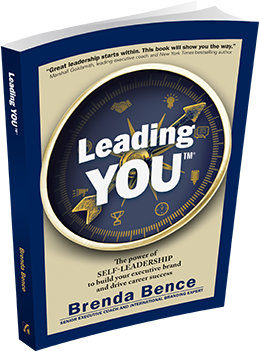
LEADING YOU™
The most important driver of overall success is your own self-leadership. How you lead yourself directly impacts your ability to lead others, and that, in turn, can prevent you from reaching your full potential.
Discover the power of SELF-LEADERSHIP to build your executive brand and drive career success.
 Brenda Bence is a globally recognized High-Stakes C-Suite Succession Coach and Executive Leadership Advisor, trusted by the world’s most influential organizations to navigate high-level leadership challenges and pivotal transitions with clarity and confidence.

