
In today’s non-stop world, when you ask someone, “How are you doing?” – the answer is very often “Busy!” We’re all so busy these days, aren’t we?
Whenever I hear that response, I like to dive deeper and ask, “Are you good busy…or bad busy?” There’s a big difference between the two.
“Good” Busy
What is “good” busy like? Good busy is when you have work and life to deal with, but you feel inspired, excited, and happy to take on those tasks. You know they will lead to accomplishments, new heights, and enjoyable experiences, so you do them with a spring in your step and grounded in a sense of purpose.
Good busy is a feeling of being “in the zone.” You know what you’re doing, you have the support you need, you have a vision of where you’re headed, and every step moves you closer to your North Star. Even if some of the tasks on your list aren’t necessarily “fun,” you still don’t mind because you’re focused on the ultimate outcomes, fueled by the passion you feel for that vision. Your schedule may be full, but you feel a sense of achievement and satisfaction at the end of each day.
“Bad” Busy
By contrast, what about “bad” busy? This kind of busy occurs when you’re faced with tasks you don’t enjoy and that aren’t helping you move toward an inspiring vision that would keep your morale high, even if you get tired. As a result, bad busy can be physically, emotionally, and mentally exhausting.
Why does bad busy happen? Here are a few reasons I’ve seen through clients in my executive coaching practice:
- You’re doing your job because you have to. You need to pay your mortgage and your bills, and this is the way you’ve always accomplished that. Even though you aren’t passionate about your job, you don’t have faith that there’s another way to maintain the same standard of living. You simply feel obligated to continue with the familiar because, well, you just don’t see any other option.
- You don’t know if you’re doing a good job at work because you aren’t getting enough honest feedback from anyone. Fueled by fear, your mind races 24/7, always nervous that you aren’t delivering well enough. “What if I’m not getting it right? What if I lose my job?” is the consistent, subconscious self-talk that underlies your days.
- You have too many demands and not enough focus on priorities. As a result, you don’t spend enough time with your family, your direct reports, your boss…or yourself. You’re never really present, either. Instead, you worry about what happened in the last meeting or what might happen tomorrow, spending mental focus time concerned about the past or being anxious about the future.
- You have to travel a lot, and you’re always packing and unpacking, running to and from airports, changing time zones and climates. This leaves you stressed and tired, with that ever-present feeling of never quite being “caught up.”
Reflecting objectively on your own situation, what would you say you have more of in your life right now – “good” busy days or “bad” busy days?
Shifting “Bad” Busy to “Good” Busy
When I asked the good-bad-busy ratio question of Graham, a C-Suite client of mine, he reflected for a moment.
“I’m not honestly sure,” he finally shared. “I really do enjoy my work and feel that most of the time I’m living life with purpose. But, I also admit there are times when I feel overwhelmed. Would you consider being overwhelmed ‘bad’ busy?”
I shared with Graham the four above-outlined scenarios for how to define “bad busy” and asked him if any of those applied.
“On occasion, I experience #3,” he said. “I do have a lot of demands, so I guess I could prioritize better… In fact, now that I think of it, having clearer priorities would reduce my angst and help me get rid of that ‘drowning’ feeling I get occasionally, even if I do enjoy what I do.”
Graham and I then reviewed this toolbox of tips below, for how to turn a potential dose of “bad busy” into “good.” How could YOU™ embrace these, too?
- Get honest about your priorities. What is really the most important in your life? In response to that question, clients almost always answer “family.” Yet, after doing a time analysis, they discover that they actually spend the least number of waking hours with family. Does that sound familiar to you, too? If so, how can you begin to shift your schedule to have more quality time with the people who mean the most to you?
- Analyze how you really utilize your time. How many hours per week do you honestly spend doing the things that fuel your soul, help you feel good, and honor who you really are? If you’re spending too little time on these types of activities, look for ways to change. Life is too short to spend so much of it on activities you dislike.
- Start small. Choose two hours per week to focus on doing something you love. Since busy-ness typically involves the left, logical side of your brain, try something that will inspire the right side of your brain – the creative side. I’m not necessarily suggesting you take a pottery or art class, but simply to do something that’s very different from what you do throughout your day. That change of habit can serve to reboot your sense of wellbeing.
- Sit back and assess the end game for you. What do you want to achieve by the end of your career or life – greater success, financial security, making a difference in your community, having more personal satisfaction? If you keep your end game constantly in mind, you’ll make choices that will lead you there.
- Recognize that you are not a victim. All that is happening to you is a matter of choice. No one has forced you into anything, so the good news is that you can change it. You may feel that you have little choice, but be honest with yourself – that’s just limited thinking. You can find ways to change your circumstances, leading to far more good-busy days than bad-busy days.
The #1 Antidote for “Bad-Busy”
What is the best strategy to combat “bad busy?” Make regular time to do nothing.
Be honest: When was the last time you allowed yourself to do absolutely nothing?
Here’s what I do: I take 1-2 minutes a few times throughout the day to center myself, close my eyes, and take deep breaths. If necessary, I close myself off in a meeting room or find a quiet space in a hallway. These short breaks may seem simple and inconsequential, but you’ll be amazed how much even just a couple of minutes can re-energize you and help you feel better,
more centered.
The Wisdom of Doing Nothing
My favorite line from the 2018 movie “Christopher Robin” is when Winnie the Pooh reminds Christopher that “doing nothing often leads to the very best something.” Very true.
So, when life gets busy, pause and ask yourself, “Is this good busy or bad?” If it’s leaning toward bad, remember Winnie the Pooh’s wise words, and make time to do nothing – so that the “very best something” can come your way.
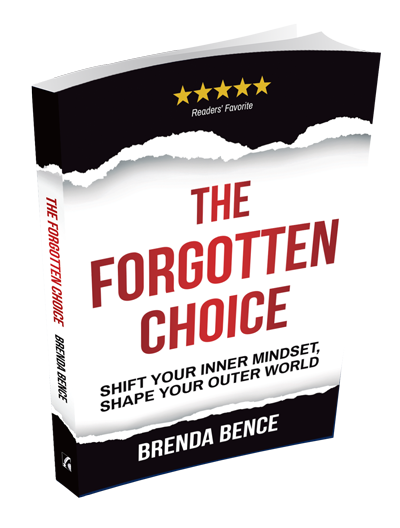
THE FORGOTTEN CHOICE
Discover a little-known decision you make every moment that either holds you back or opens doors to unlimited possibility.
 Brenda Bence is a globally recognized High-Stakes C-Suite Succession Coach and Executive Leadership Advisor, trusted by the world’s most influential organizations to navigate high-level leadership challenges and pivotal transitions with clarity and confidence.

