You Are What You Think – Face a Weak Economy with a Strong Personal Brand

by | Excellence in Leadership

Employers want to know why you are the best choice for the job. Should they hire you or another candidate? But here’s a surprising truth: The person who best connects with the interviewer is most likely to get the job – even over someone who might be more qualified. That’s where your personal brand comes in.

Maybe you’re thinking, “A personal brand? I don’t have one or even want one!” Reality is, though, you do already have a personal brand whether you realize it or not. Just by being you in interviews, on the job, or wherever you present yourself, you have a personal brand. Defined as “the way you want people to perceive, think, and feel about you in relation to others,” your personal brand is alive and well and exists in the minds of other people – including interviewers.
That’s why it’s important to take control of your brand, to make sure you make the impression you want throughout your job search.

So, learning to master your personal brand is key to success, and one way to do that is to avoid the Top 10 Job-Seeker Personal Brand Busters®. These, listed below, are among the most damaging mistakes that job seekers make when looking for a new position. Avoid these Busters™, and you’ll communicate a more powerful personal brand to potential employers before, during, and after your interviews.

In your job search efforts, have you committed any of these Job-Seeker Personal Brand Busters®?

1. Not paying attention to your personal brand on the Internet. Chances are, your interviewer or future boss will search for your name on the Internet prior to your interview. So, think twice before posting those wild photos from Mardi Gras on your Facebook page. If you blog or use Twitter, pay attention to what you say. Avoid writing negative comments about others (especially former employers and coworkers), and steer away from profanity and strong opinions.
2. Not visiting the restroom prior to your interview. Ok, let’s get the obvious out of the way: You definitely don’t want to squirm in your chair because you haven’t had time to go to the restroom before the interview! But you should also use a quick pop into the restroom to make sure your hair is neat, your suit hasn’t picked up any lint, and everything is in its proper place.
3. Answering a question without taking the time to think or before fully understanding the question. Let’s say you’re in an important interview, and you’re asked a question that takes you by surprise. You’re not sure how to respond, but you feel you need to say something right away to make you look confident. So, you just start babbling, spouting out whatever comes to mind. The truth is that interviewers actually prefer that you pause for a few seconds to think of a good answer before you speak. If you rush to answer every question, you run the risk of saying something you don’t really mean.
4. Only looking at one interviewer when there are two or more interviewers in the room. Job seekers tend to look at the interviewer who is most expressive or seems the most receptive. But if you’re interviewed by more than one person, make sure you look at everyone in the room when you speak. Make eye contact with one interviewer for a few seconds, then shift to another and another in order to connect with all of them.
5. Talking only about what you want out of the job and not what the company needs or wants. The employer is more interested in what you can do for the company and not vice versa. If you’re asked in the interview what you want from the job, answer the question intelligently, but don’t go on and on about all that you’re hoping the company can offer you.
6. Speaking negatively about your current or former employer. This was confirmed in a survey of interviewers and recruiters conducted by CareerBuilders.com where 49% said that the worst interview offense is speaking negatively about a former boss. Saying something mean-spirited about a former employer will leave a bad taste in an interviewer’s mouth, so find a way to shed some positive light on your current or previous company and boss.
7. Asking questions about pay and benefits during an initial interview. Recruiters say they immediately read that kind of question as a sign of someone with little experience. It’s okay to ask an employment agent or recruiter about salary and benefits, but an initial interview isn’t the right time to ask those questions unless the interviewer brings it up. You can cover those subjects once you’re further along the interview process.
8. Not asking questions in a way that helps sell yourself. Ask questions in a way that highlights your strengths. For example, you could ask something like: “Given my experience managing big projects in my current job, do you see opportunities for someone like me to take on a project manager role here, too?”
9. Not being prepared with good, thoughtful questions to ask at the end of an interview. Being prepared with smart questions about the company and the job will show you’ve done your research. It demonstrates that you want to be a part of the organization and that you’re taking the process seriously.
10. Beating yourself up if you don’t do well in an interview or if you don’t get the job. You may have done better in the interview than you think, and the company’s reasons for not choosing you may have nothing to do with you at all. The company might have decided to eliminate the position entirely, or they may have chosen someone from within. So, don’t let a less-than-stellar experience turn you into a pessimist. Stay positive! Evidence shows that people who are optimistic about their job search actually get jobs more quickly.

So much has been said, discussed, and argued about the “economic situation”. Is it possible that there is a stone unturned on this topic? Well, yes there is … because the way you communicate your personal brand in this economy can have a big impact on how well you weather the challenges that could come your way.

In particular, your reactions to the economy, your thoughts about the economy, and your actions related to the economy can impact the ultimate outcome for your personal brand – the trademarked you. In fact, your reactions, thoughts, and actions are three of five total activities that communicate your personal brand each and every day (along with your look and your sound.)

REACTIONS. If you want to see someone’s true personal brand, watch them react to adverse events. How you react in crisis situations says a lot about who you really are. The key to mastering your personal brand is to remain consistent over time. Remember that you can’t always control what happens to you, but you can control how you react to what happens to you. That’s how strong personal brands are built.

So, think about the personal brand you’re presenting through your reactions to the economy. Are you hiding in a corner with your head buried in the sand? Are you talking ‘doom and gloom’ with your friends every chance you get? Are worries about the economy keeping you awake at night?

Take a deep breath, and keep a calm, clear head. You will make better decisions when you stop yourself from shifting into a fear-driven state that may cause knee-jerk reactions you regret later.

THOUGHTS. Thoughts are things. That may sound like a radical idea to you, but scientists are proving more and more that thoughts exist in the world in a very real way, and they have a strong influence on what happens to you. So, become aware of what your thoughts are telling you about the economic situation. Sit back and take inventory of how you feel about the financial climate right now. What emotions come to mind? Fear? Anxiety? Anger? You will act – and also build your personal brand – based on those feelings. So, if you’re full of angst, consider the possible actions that will stem from that.

ere’s how psychiatrists put it: Your thoughts drive your emotions, and – in turn – your emotions drive your behavior. And those behaviors are responsible for creating the results – the ultimate outcomes – of your life. It’s good old cause-and-effect in action, with the ultimate “cause” being your thoughts.

So, even if you can’t quite get on board with believing that thoughts are things, at a minimum, your thoughts have the power to undermine your personal brand if you’re not careful.

So, make your thoughts productive. Take proactive steps to manage your money well. Focus on what you do have that is positive, and focus on what you are grateful for. Chances are you have it a lot better than many people in the world. Don’t keep your Thoughts pinned on what isn’t perfect or what could go wrong. Think about how things can go right.

Watch your words! What you say stems from your thoughts, too, so be mindful of how you “talk” about today’s economy. Just calling the situation a “crisis” (which is the keyword you see spread all over magazines, newspapers, and television) creates anxiety. Think about it: The U.S. government called its economic package a “bailout.” Doesn’t that sound like Congress is trying to save a sinking ship? They couldn’t have chosen a worse word. And remember that the media thrives on creating drama in order to sell their publications or get you to tune in to their newscasts. That doesn’t mean that the drama is always as cataclysmic as it sounds. Sit back and objectively analyze your own situation before deciding if it truly is a “crisis.”

You probably know people who are talking about all of this as though the world is coming to an end. What personal brand are those people communicating? What good will a brand like that do to make their economic prospects brighter? No one wants to be around someone with a negative or a defeatist personal brand. So, don’t fall victim to branding yourself in that way. It will do nothing to help you build a better financial future for yourself.

If someone you know tries to suck you into their big black hole of doom, politely excuse yourself, or focus on something more constructive. Stay positive in your conversations, and it will make a world of difference. Be an example of how to respond, and remind others of what is truly important. Just like in the market crashes of 1929 and 1987, this, too, shall pass.

ACTIONS. If you still find that the economic situation is keeping you up at night, objectively assess your situation, and make a plan. Are you anxious because you’re too far in debt? If that’s the case, take decisive action by seeing a financial counselor. (And if your financial advisor talks negatively about the markets, find another one!) Sit back, and calmly consider: What feels “right” to do? Set some goals, and take at least one action each day to move closer to that goal.

There are always ebbs and flows in our finances – whether personal or global. The trick is to find productive ways to make things better. If you purposefully work at remaining consistent with your desired personal brand, you’ll be one step closer to moving out of the storm.

How will we look back on this economic event in the future? Reports about both the 1929 and 1987 market crashes have shown that people who kept a calm demeanor and stayed the course ended up doing better in the long run –from both a financial and an emotional standpoint. And you can be sure they built strong personal brands in the meantime, too.
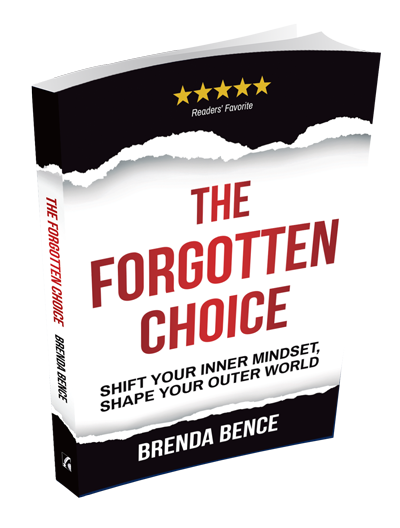
The Forgotten Choice by Brenda Bence

THE FORGOTTEN CHOICE

Discover a little-known decision you make every moment that either holds you back or opens doors to unlimited possibility.

Brenda Bence is a globally recognized High-Stakes C-Suite Succession Coach and Executive Leadership Advisor, trusted by the world’s most influential organizations to navigate high-level leadership challenges and pivotal transitions with clarity and confidence.

Honored by Thinkers50 as a Coaching Legend, Brenda is also ranked by Global Gurus as the #3 Executive Coach worldwide and has been inducted into the Professional Speaker Hall of Fame.

With an MBA from Harvard Business School, Brenda built her career leading billion-dollar brands at Procter & Gamble and Bristol-Myers Squibb, where she led businesses with global remits, spanning four continents and 50 countries. Building on her own hands-on leadership experience, she founded Brenda Bence International (“BBI”), now serving clients across six continents, with offices in both the U.S. and Asia.

Visit www.BrendaBence.com to learn more.

Related Articles

Pin It on Pinterest