
There’s a quiet assumption in many organizations:
“Once you reach the top, you’re all set.”
No more personal development is required.
So companies tend to pour resources into junior, mid-level, and emerging senior leaders… while the investment fades at the very top.
But the truth is: *The higher the role, the greater the impact of blind spots.*
At the C-Suite level:
• Decisions affect thousands of employees – and millions or billions in revenue
• Leadership behavior shapes the entire culture
• Small misjudgments scale into large consequences
Which means the cost of *not* developing at the top is exponentially higher.
And the benefits of that investment are even more impactful.
When C-Suite leaders commit to their own personal development, they…
1️⃣ … finally hear what others won’t tell them.
At the top, honest feedback becomes rare. Development creates space for truth – not just agreement.
2️⃣ … shift from reacting to architecting.
Instead of managing complexity, they shape it. That’s real strategic leadership.
3️⃣ … role-model what the organization becomes.
A learning leader creates a learning culture. A stagnant leader creates the opposite.
4️⃣ … future-proof the business.
In a world that keeps changing, the leader who keeps evolving becomes the organization’s greatest competitive advantage.
In short:
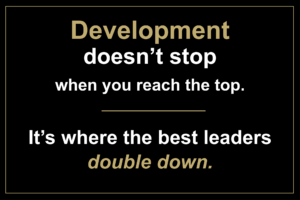
💡Development isn’t something leaders graduate from. It’s something the best leaders double-down on.
Share your thoughts:
What other reasons make C-Suite personal development so critical?


0 Comments