
Let’s face it: There are never enough hours in the day to get everything done – especially when you’re running a business. So, focusing on a topic like personal branding may end up at the bottom of your “To Do List.” Just how important is personal branding to the success of your overall business anyway?
The truth is that whether or not we focus on personal branding, every single one of us already has a personal brand – whether we like it or not. That’s right – you and every member of your team has a personal brand, even if you’ve never thought about it before. That’s because your personal brands exist in the minds of your customers or clients. Everyone you meet forms an impression of who you are and what your company can do. They will know very quickly if they trust you and want to do business with you. That’s the power of personal branding.
But when you own a business, your company’s success isn’t built just on your company’s brand and your individual personal brand. It’s also built on the personal brands of everyone who represents your business in the marketplace. So, how do you know if your team is presenting your company in the best possible light? Well, if they’re not creating their personal brands consciously, they may be inadvertently leaving negative impressions about your company wherever they go. Only through controlling their individual personal brands can your team reach their full potential and contribute to your company at the maximum level.
When people make the commitment to define and communicate their personal brands in the workplace, they begin to focus on their strengths and diminish their weaknesses. They think specifically about how they can distinguish themselves. They become more aware of how they are perceived by others and make adjustments to be the best they can be.
Personal branding not only helps your employees excel in their jobs and represent you in a positive way, but it also gives them a sense of purpose and pride in their work. Pause for a second to envision a workplace where every member of your team is acutely aware of how customers perceive, think, and feel about them. Imagine that they consciously focus on presenting their personal brands every time they attend a meeting or make a sales call. When people know how to achieve or exceed their goals, they’re more willing to go that extra mile because they are fulfilled in their jobs. They know they’re making a contribution to your company, and they feel a sense of accomplishment.
The world would be a very different place if everyone accomplished a lot at work and felt a sense of fulfillment, wouldn’t it? So, how do you bring personal branding to your team?
First of all, dispel the myth that personal branding is all about how you look. No matter how beautiful the suits or uniforms your employees may wear, if talent and integrity are missing, your customers won’t be fooled for long.
No, personal branding is about much, much more than just how you look. When you do it right, your personal brand expresses who you are at your very best – or perhaps I should say, who “YOU™” are. That’s right – the trademarked, branded you – which is a brand just like your favorite toothpaste. And YOU™, as well as each and every member of your team, have the ability to inspire the same trust and loyalty from employees, clients, and customers that you have for that favorite brand of toothpaste. It’s simply a matter of learning how to carefully craft, communicate and master an ownable and powerful personal brand.
A Simple, Step-By-Step System
When you’re running a business, you don’t have time to read a lot of theory. You need frameworks and systems spelled out for you in no-nonsense terms so that you can get on with the brass tacks of the process and reap the benefits of your efforts. This is why I developed a clear-cut personal branding system that walks you and your team through each step of the personal-brand-building process. This system, adapted from the same marketing framework that has created every top-selling corporate brand we know, is a proven method for success. Indeed, if it works for your favorite brand of car or computer, why shouldn’t it work for YOU™?
The system, which was formed through years of training, speaking, and coaching on the topic of corporate and personal branding across multiple countries, is spelled out in my recently-released book, How YOU™ Are Like Shampoo: The Breakthrough Personal Branding System Based on Proven Big-Brand Marketing Methods to Help You Earn More, Do More, and Be More at Work.
The first step – defining your personal brand – involves carefully crafting the six elements that blend together to create what I call your “Personal Brand Positioning Statement.’
The system gives you and your team an easy-to-follow framework to determine your current personal brand (the one you may not have even known you had), compared with the personal brand you would like to create in order to achieve your highest goals. Utilizing the Personal Brand Positioning Statement allows you to see exactly where your current brand may fall short and where you need to improve to achieve optimal success. To give you a glimpse, the six elements are:
- Audience: Who are you trying to impact or influence with your personal brand?
- Need: What are the needs of your Audience, and how can you fill those needs?
- Comparative Framework: Who else might your Audience consider to meet their needs?
- Unique Strengths: What are the strongest talents you can offer your Audience to respond to their Needs?
- Reasons Why: What credentials prove to your Audience that you can actually deliver your Unique Strengths?
- Brand Character: What is the personality or overriding temperament of your individual brand?
The resulting Personal Brand Positioning Statement guides you through specific questions to ask yourself about each of these elements until you have defined a crystal clear picture of where you and your team members are with your current personal brands, as well as where you want to be with your desired personal brands.
Of course, defining your personal brand isn’t enough. After all, if you and your teams simply stick your well-defined Personal Brand Positioning Statements into desk drawers and leave them there, what good will that do?
You have to move on to Step 2 – effectively communicating your personal brand to others – in order to become known for what you alone can bring to your Audience. There are clear and specific ways to let others know your personal brand without promoting yourself in an overbearing way.
Corporate branders work hard to communicate their brands via packaging labels, commercials, and print advertising. But, personal branding is more subtle and doesn’t involve commercials and advertising. You still have to take specific steps to communicate your brand in order for it to have an effect on your Audience, and the system shares five specific activities we all do each and every day at work that most effectively communicate your personal brand.
The third and last step of the How YOU™ are like Shampoo personal branding system involves avoiding Personal Brand Busters™ – mistakes that can consciously or unconsciously damage the personal brand you’ve worked so hard to define and communicate in the workplace. Personal Brand Busters™ offers you and your team members the chance to learn from the career mistakes of others so you can steer clear of those same mistakes yourselves.
In the end, if you and your team aren’t in control of your personal brands, how will you know your collective current personal brands aren’t actually wreaking havoc, preventing your company from increasing its bottom line and reaching the best possible marketplace positioning? Personal branding is a sure-fire way to solidify your company’s bottom-line growth… and that’s just too important to leave to chance.
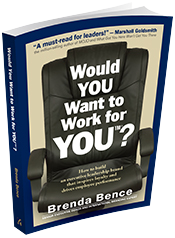
WOULD YOU WANT TO WORK FOR YOU™®?
Discover how to build an executive leadership brand that inspires loyalty and drives employee performance.
As a senior leader wanting to release your team’s productivity and advance to the top echelons of your industry, it’s vital to start by looking inward.
 Brenda Bence is a globally recognized High-Stakes C-Suite Succession Coach and Executive Leadership Advisor, trusted by the world’s most influential organizations to navigate high-level leadership challenges and pivotal transitions with clarity and confidence.

